

In February 2026, researchers uncovered one thing that ought to give each safety chief pause. A malware operation referred to as SmartLoader, beforehand identified for concentrating on shoppers who downloaded pirated software program, had fully pivoted its infrastructure.
SmartLoaders new goal was builders, and its new entry level was a protocol most safety groups had by no means heard of. The payload delivered to victims: each saved browser password, each cloud session token, each SSH key on the machine.
The protocol was referred to as MCP. And it had been working silently in developer environments throughout 1000’s of organizations for over a 12 months.
What MCP truly is
Mannequin Context Protocol (MCP) is an open customary launched by Anthropic in late 2024. It solves an issue that has annoyed AI builders for years: each time you wished an AI mannequin to connect with a brand new instrument or knowledge supply, somebody needed to write customized integration code. One integration for GitHub. One other for Slack. One other on your database. Each is bespoke, fragile, and requires ongoing upkeep.
MCP fixes this with a single standardized connection layer. Think about the way in which USB standardized machine connections. Earlier than USB, each peripheral wanted a selected port. After USB, any compliant machine plugged into any compliant host. MCP does the identical factor for AI brokers and exterior instruments: one protocol, infinite connections.
Since its launch, MCP has been adopted by a exceptional vary of organizations — Anthropic, OpenAI, Google DeepMind, Microsoft Copilot Studio, Cloudflare, Stripe, Salesforce, and dozens extra enterprise platforms. The AI improvement instruments your builders are already utilizing — Cursor, Visible Studio Code with Copilot, Claude Desktop, Windsurf — are all MCP-enabled. When a developer makes use of considered one of these instruments, they’re utilizing an MCP host.
That’s crucial factor to grasp: MCP is already in your atmosphere. The subsequent query is, what’s it related to?
The structure that creates the chance
MCP has three parts. Understanding each briefly is sufficient to see why the chance is in contrast to something your safety program has handled earlier than.
The MCP host: That is the client-side AI software — Claude Desktop, Cursor, VS Code with Copilot. That is what your builders work together with. When a developer installs a brand new MCP server, the host robotically trusts it and begins utilizing it. No IT approval. No safety overview. No audit path by default.The MCP server: The exterior instrument or service the AI connects to. A GitHub server. A Slack server. A database server. Critically, anybody can construct one and publish it to a public registry. In reality, there at the moment are greater than 21,000 MCP servers listed throughout the 4 largest public registries, with virtually no vetting of who constructed them or what they really do.The MCP shopper: That is the middleman that passes directions between the AI and the server. It operates silently within the background. The consumer doesn’t see what the shopper sends to the server, what the server returns, or what the AI does with that knowledge.
To interrupt down the chance elements entailed within the above three parts of MCP server utilization, this is the outline in plain phrases:
An AI agent related to an MCP server can learn information, execute instructions, question databases, ship emails, and make API calls — all throughout the permissions of the logged-in developer, and your safety group has no default visibility into any of it.Why MCP differs from the Shadow IT drawback you already managed
Most safety leaders at mid-sized organizations have lived by means of the Shadow IT wave. Staff began utilizing Dropbox, private Gmail accounts, and unmanaged SaaS instruments. The danger was clear: knowledge leaving the group with out governance. It took years — and important funding — to ascertain the detection, coverage, and controls wanted to handle it.
MCP creates the same drawback, however with a materially greater danger profile.
Shadow IT saved your knowledge with out approval. A shadow MCP server can act in your knowledge with out approval. The distinction is a submitting cupboard that strikes itself to a stranger’s home, and one which reads, processes, and responds to requests.
Conventional entry controls are tool-based, which means you govern who can entry a selected system. An AI agent related by way of MCP can entry a number of techniques in sequence — studying from one, writing to a different, calling an API with the outcomes — combining permissions in methods no single entry coverage anticipated. And that agent can do that in response to a single, atypical consumer request.
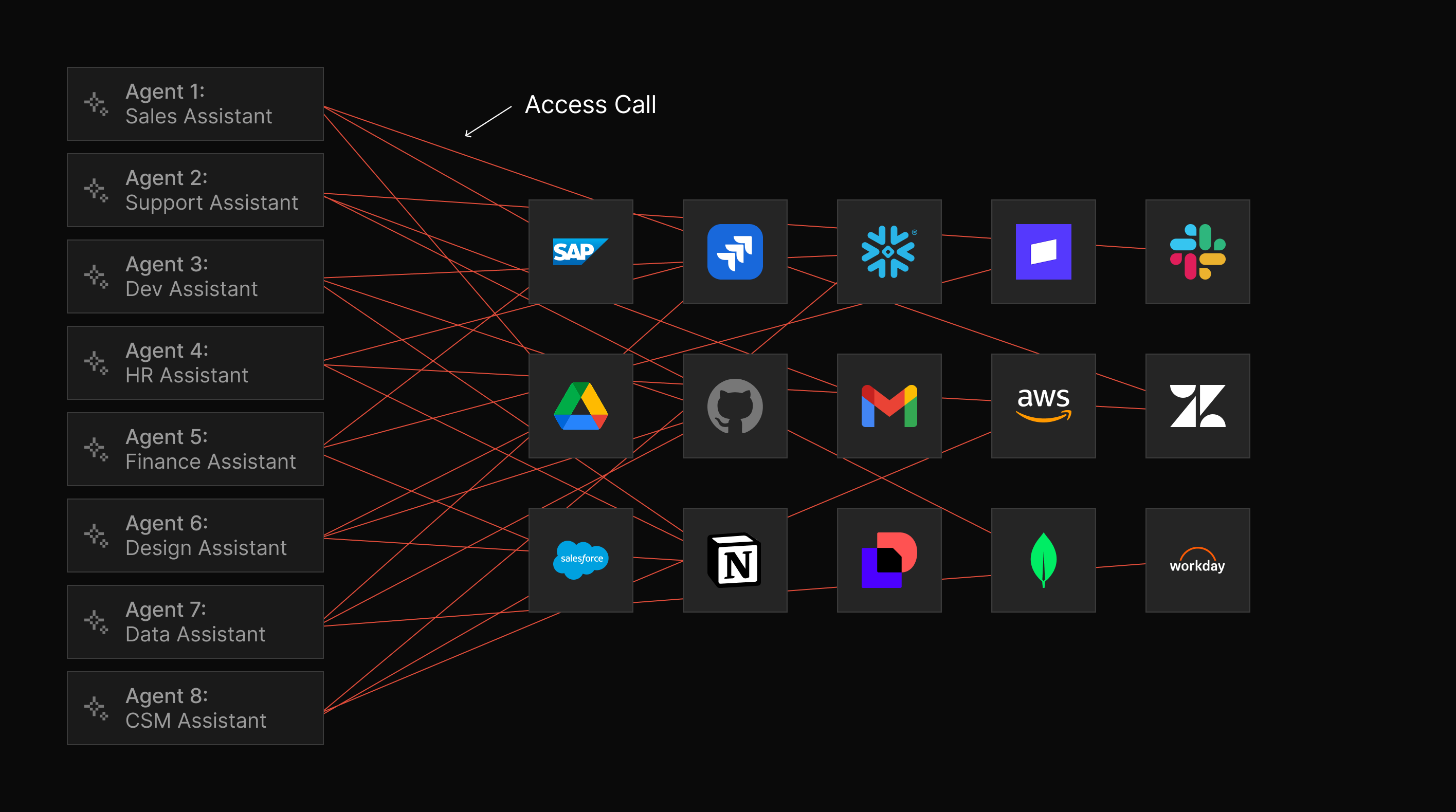
There is no such thing as a MCP equal of a company app retailer, an approval workflow, or an automatic dependency scanner. A developer can set up a brand new MCP server in seconds. Most do.
In case your safety group already struggles with the context hole — spending 43% or extra of its time assembling context as an alternative of deciding or remediating — MCP provides a brand new ungoverned instrument floor that makes that hole worse. Extra instruments to correlate, extra shadow infrastructure to find, extra indicators with no present detection. This is similar dynamic that already causes 79% of corporations to find out about threats from third events somewhat than from their very own instruments. MCP merely extends that publicity to the AI agent layer.
The dimensions of the unverified ecosystem
The numbers listed below are vital as a result of they exhibit that the theoretical danger tied to MCP server utilization is already a sensible one.
The official GitHub MCP Registry — essentially the most ruled listing in existence — accommodates 57 verified entries, all fastidiously reviewed and printed by vetted organizations.
Smithery.ai, however, one of the extensively used group registries, lists over 3,500 servers, and of these, 92% carry no verification badge of any type.
On the most excessive finish, MCP.so lists over 16,000 servers and operates with primarily no moderation. Researchers have discovered that for each verified model server on that platform, between 3 and 15 unverified lookalikes exist utilizing the identical model title.
For a safety chief at a mid-market group: if any of your builders use an AI-powered IDE, the likelihood that unvetted, third-party MCP servers are already working in your atmosphere is excessive. The query just isn’t whether or not this represents a danger; we all know it does. The query is whether or not you recognize about it.
The safety inquiries to ask this week
This isn’t an issue that requires a six-month program to start addressing. A lean group can set up a significant baseline with 4 sensible questions:
1. Which AI improvement instruments are your builders at the moment utilizing?
Cursor, Claude Desktop, VS Code with Copilot, Windsurf, and Claude Code are the commonest. Ask the event group leads instantly — don’t assume.
2. Are any of these instruments connecting to MCP servers from public registries?
The reply is sort of definitely sure if any of the above instruments are in use. The subsequent query is: which servers, and who printed them?
3. Do you’ve gotten any visibility into what these servers can entry?
Not simply what they’re alleged to do, however what permissions the related consumer account holds, and due to this fact what an MCP server might theoretically attain.
4. Has your AI tooling coverage been up to date within the final six months to deal with MCP?
The aim for this week is to not resolve the issue. It’s to grasp the dimensions of your present publicity so you possibly can prioritize what comes subsequent.
What comes subsequent on this sequence
The six posts on this sequence construct from the foundational to the sensible. Submit 2 examines the precise threats in public MCP registries — together with documented proof of typosquatting, model impersonation, and an actual provide chain assault that spent months constructing a pretend developer ecosystem earlier than deploying its payload.
Posts 3 and 4 cowl the runtime assault courses — immediate injection and power poisoning — with case research from manufacturing incidents. Submit 5 addresses the Shadow MCP drawback in your individual atmosphere, and publish 6, lastly, delivers a sensible playbook calibrated particularly for lean safety groups.
The risk is documented. The assault patterns are established. The query now could be visibility.
MCP is another exterior risk floor — alongside darkish net publicity, credential leaks, and model impersonation — the place breaches begin. Cybersecurity Breach Danger screens all three surfaces from a single platform, and Risk Monitoring now extends that visibility to the MCP ecosystem by discovering servers printed underneath your model title, figuring out unofficial lookalikes, and surfacing new registry exercise earlier than it turns into a breach. See what MCP servers point out your model →
Subsequent on this sequence: Submit 2 — 1 in 15 MCP Servers are Lookalikes: Is Your Org at Danger?

