

Mannequin Context Protocol (MCP) servers facilitate the mixing of third-party companies with AI purposes, however these advantages include important dangers. If a trusted MCP server is hijacked or spoofed by an attacker, it turns into a harmful vector for immediate injection and different malicious actions.
A technique attackers infiltrate software program provide chains is thru model impersonation, also referred to as typosquatting—creating malicious assets that carefully resemble trusted ones. Our analysis asks: may this identical methodology compromise the MCP ecosystem?
The anatomy of a “Squatting” assault
To reply that query, we have to study how these assaults really work. A profitable “squatting” try requires two components:
Accessibility: The attacker should be capable of create a malicious useful resource on a platform the place customers are on the lookout for instruments. (e.g., Anybody can register an unclaimed net area).Human Error: The consumer should make a mistake whereas navigating to that useful resource. (e.g., A consumer unintentionally sorts ‘gogle.com’ into their browser as an alternative of the meant website).
Within the MCP ecosystem at the moment, we will show that each situations are being met. Customers are already getting into server names with “fat-finger” typos, and open registries exist the place malicious actors can distribute code to use these precise errors.
Misspelled context protocol servers
In a current analysis mission, we analyzed 18,000 Claude Code settings information collected from public GitHub repositories. Along with permissions for the instructions Claude can run, these information additionally include the MCP servers that every Claude occasion can make the most of.
After we aggregated the configurations for MCP servers and browsed by way of their names, we observed some fascinating outliers: server names that, at first look, gave the impression to be duplicates however have been, actually, slight variations on different server names. In different phrases, these entries in Claude permissions information validated that the human error in title entry that makes typosquatting profitable exists on the consumer facet of the MCP ecosystem.
Extra subtly, many entries for MCP server names contained variations on casing and separator characters. At present, the MCP ecosystem hasn’t settled on an ordinary for dealing with capitalization [1]. There isn’t any excellent technique to stop issues attributable to human error, with trade-offs both approach:
The “Silent” Match: If MCP names will not be case delicate, and a system routinely converts every little thing to lowercase and/or removes separators (e.g., treating “UpGuard” and “upguard” as the identical or “upguard” and “up_guard”), a typosquatted server might be deployed alongside a authentic one with out the consumer understanding that the system sees their names as the identical.The “Lookalike” Identification: If MCP servers are case-sensitive, an attacker can register the lowercase model of a well-known model (like hubspot vs. HubSpot). Since there isn’t any central registry to implement distinctive possession, each can exist concurrently. Customers would possibly set up the lookalike server by getting into the flawed casing.
Variations in casing have been by far the commonest type of variation. Throughout all the ecosystem, nonetheless, the opposite types of MCP server nam confusion may current a significant assault vector.
Most title variations use totally different capitalization, however some have the character modifications typical of typosquatting
These examples show a vital level: AI agent programs are human-configured, and people are susceptible to errors. Whereas a misspelled title appears minor, in an AI ecosystem, it’s a direct invitation for an attacker to step in.
Unmoderated registries
For an attacker to use a typo, they want a spot to host their “lookalike” server the place a consumer is more likely to discover it. For customers shopping the online, it is a faux area designed to catch customers who misspell a URL. Within the software program world, it’s a malicious package deal on registries like NPM or PyPI.
These package deal registries are an ideal analogy for the danger we see in MCP at the moment. Whereas these platforms have some controls, attackers have turn into specialists at “seeding” them with malicious code that mirrors standard instruments. When a developer makes a mistake throughout an set up command–like putting in “acitons/artifact” as an alternative of “actions/artifact”–they’re really deploying the attacker’s code into their native surroundings.
For MCP servers, the supply mechanism is at the moment much more susceptible. As a result of the ecosystem is so new, registries are unstandardized and range wildly in how they vet new uploads. (And would possibly even depend on the NPM registry for artifacts). We analyzed the 4 hottest registries to see how simply an attacker may “squat” on a model title.
The outcomes present the commerce offs between safety and moderations versus openness and progress.
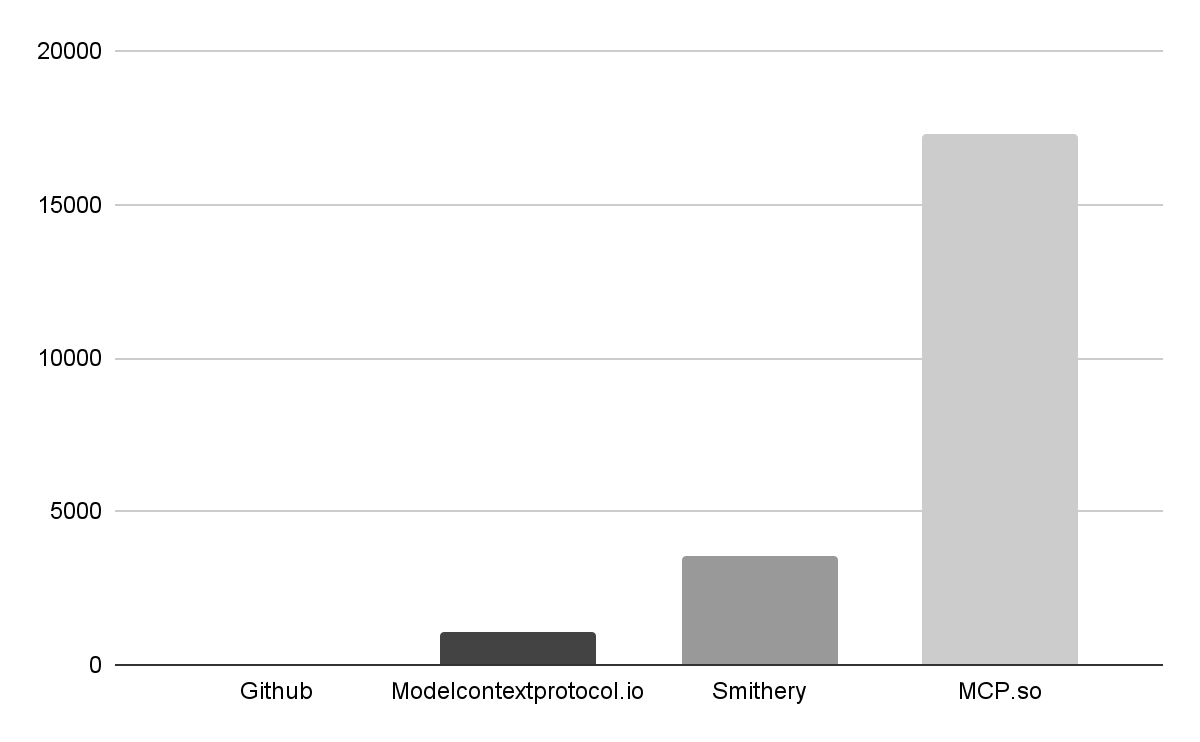 Variety of MCP servers in 4 main registries. Github’s curated assortment approaches zero compared to others.GitHub MCP RegistryStatus: Extremely Moderated / Official OnlyThis registry is the gold customary for safety, however has the smallest choice, containing solely 57 official entries from established service suppliers. The specter of an attacker-controlled server slipping into this record could be very low, making it a protected, although restricted, reference level.Smithery.aiStatus: Group Market / Blended ModerationWith over 3,500 servers, Smithery is a well-liked hub that permits group contributions. Whereas they use an “official” badge to confirm distributors, our pattern of 847 servers confirmed that solely 8% of the servers carried this badge. The remaining 92% are unverified, creating a big floor space for potential impersonation.“Official MCP Registry” (modelcontextprotocol.io)Standing: Rising / Inconsistent VerificationLaunched in late 2025, this registry hosts about 1,000 servers. It at the moment lacks a proper “verified” property. Whereas namespaces can trace at a server’s origin (whether or not it’s printed by a vendor or a Github consumer), the shortage of a transparent visible belief sign makes it tough for the typical consumer to tell apart between a group mission and a company software.MCP.soStatus: Unmoderated / Excessive RiskAs the biggest assortment with over 17,000 servers, MCP.so represents the “Wild West” of the ecosystem. Whereas some servers are marked as “featured” or “official,” the factors for these labels are imprecise. The sheer quantity of unvetted code right here makes it the first goal for attackers seeking to seed the ecosystem with lookalike servers.Model impersonation by way of MCP server
The huge hole between GitHub’s 57 official servers and MCP.so’s 17,000 entries is crammed nearly fully by group contributions. Whereas this community-driven progress is a energy of the ecosystem, it additionally presents creates fertile floor for model impersonation.
As a result of MCP servers are light-weight and straightforward to construct—usually with the help of AI coding brokers—an attacker can simply create a mission that appears like a longtime model. These registries then present the right distribution methodology to attach these malicious servers with unsuspecting customers.
On one hand, that is anticipated; builders naturally wish to share instruments for his or her favourite platforms. Nevertheless, this creates an surroundings the place a consumer on the lookout for an “Official HubSpot” server would possibly see 9 totally different “HubSpot” choices—all of them receiving energetic visitors—however solely one in all them really is offered by HubSpot.
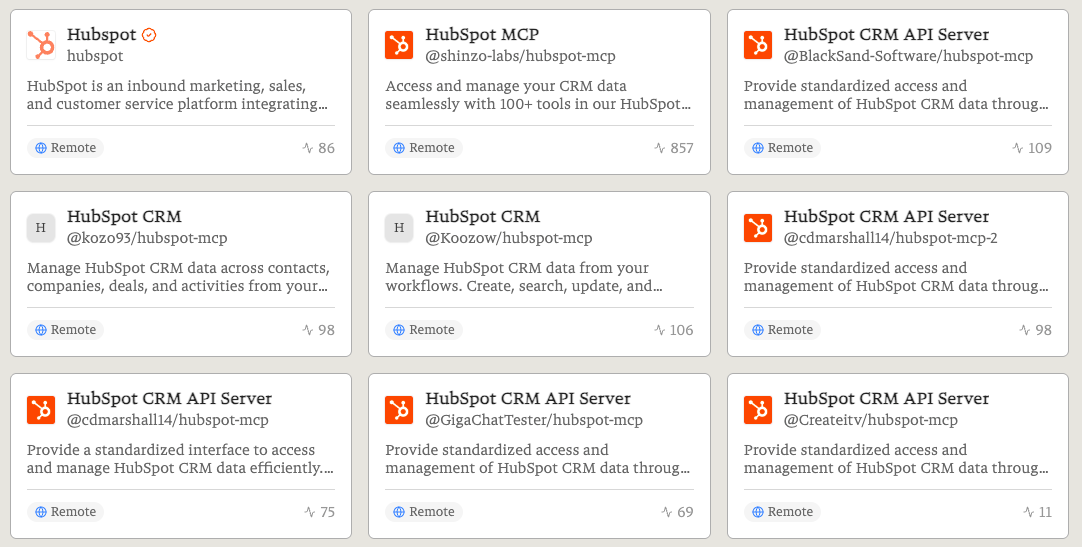 9 distant “Hubspot” MCP servers, one in all which is offered by Hubspot, all of them receiving visitors.The “Lookalike” audit
To measure how ceaselessly registries are populated with servers that might be used for model impersonation, we extracted 43 model key phrases (similar to “GitHub,” “Supabase,” and “Tableau”) from verified servers and looked for matches among the many unverified ones. The outcomes have been startling:
The Multiplier Impact: For each official model server, we discovered between 3 and 15 unverified lookalikes utilizing the identical model names.The Quantity: lookalikes for simply these manufacturers account for 10–16% of all MCP servers throughout the registries we studied.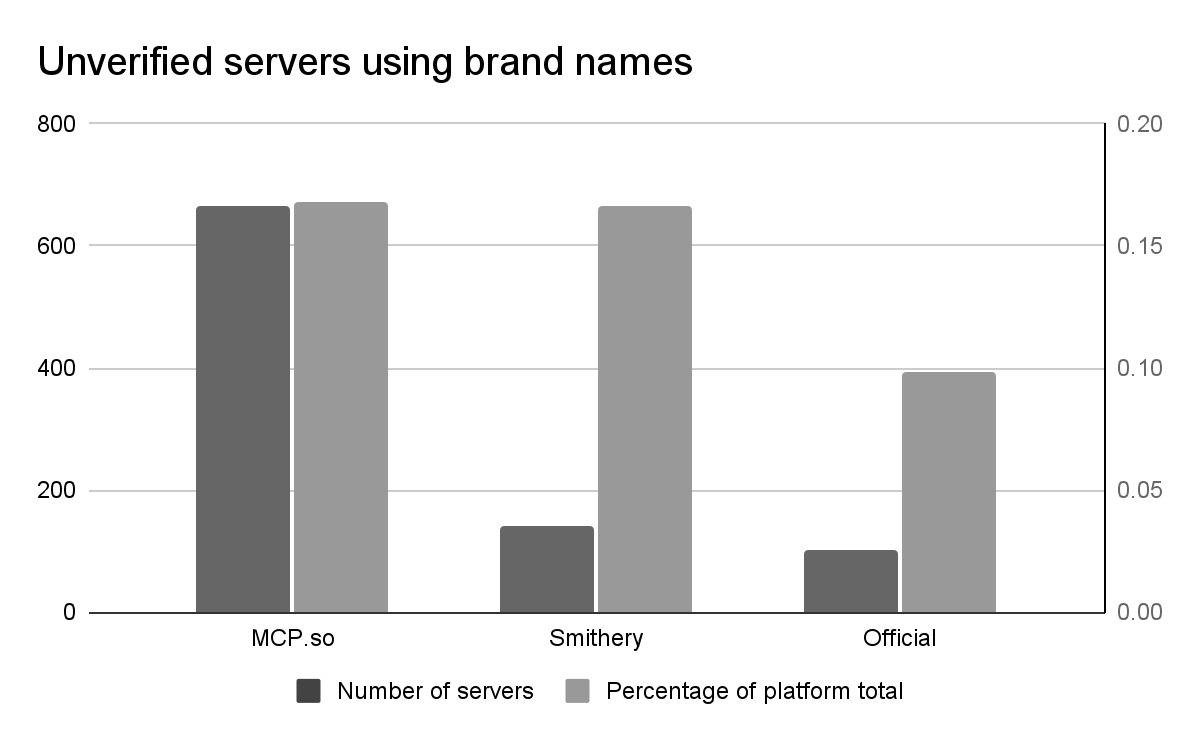
MCP.so has each the best uncooked variety of MCP initiatives that appear to be verified initiatives. The “Official MCP Registry” at the moment has the fewest, although that would enhance if it features the identical type of mass adoption because the registries launched earlier than it.
Distant MCP servers relying on untrusted Github customers
MCP servers function in one in all two environments, and every presents distinct safety tradeoffs:
Native Servers: These are code artifacts {that a} consumer downloads and runs on their very own machine. The chance of name impersonation right here is conventional however extreme: if the domestically executed code is malicious, it has rapid entry to the sufferer’s system.Distant Servers: These are hosted by a 3rd occasion, relieving the consumer of the necessity to run the server themselves. Whereas handy, this requires integrating with a service operating elsewhere. The distant tackle have to be trusted.
In idea, distant MCP servers hosted by a good group can present assurance to the top consumer that they aren’t operating malicious code. Nevertheless, inspecting utilization information of Smithery’s distant servers reveals that a number of the most energetic servers depend on code from group Github customers, making the safety of these consumer accounts a part of the availability chain for finish customers of the distant server.
For instance, when trying to find GitHub MCP servers on Smithery, the official GitHub server is listed alongside a number of others. Essentially the most generally used server on the time of analysis is hosted by Smithery however deploys code from a repo owned by Github consumer “GigaChatTester.” In different phrases, the account safety of GigaChatTester’s private GitHub account is a load-bearing a part of the software program provide chain for hundreds of builders.
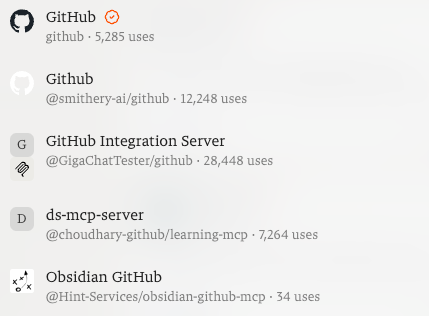
This isn’t an remoted case. Different MCP servers based mostly on GitHub repositories managed by people—reasonably than the businesses behind the companies—frequently obtain hundreds of calls per thirty days. As AI brokers achieve extra autonomy, the trade should transfer towards a mannequin the place the “who” behind the code is as verified because the code itself.
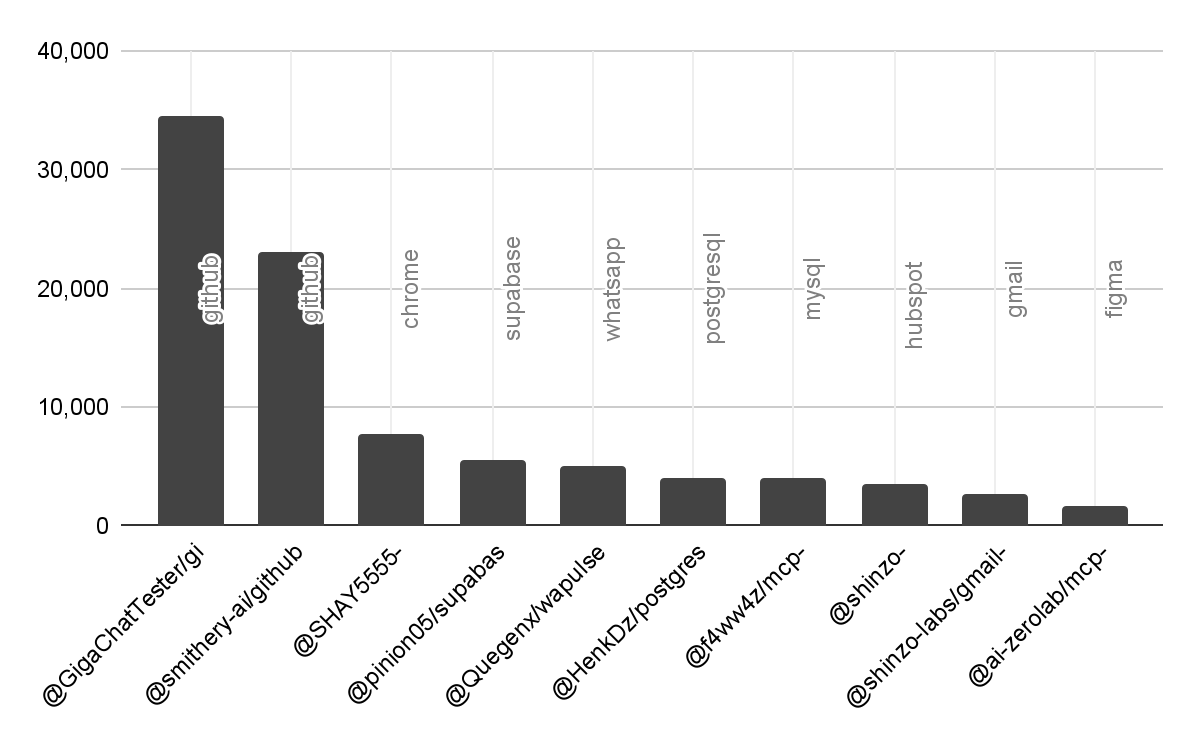 Month-to-month utilization for unverified distant MCP servers.
Conclusion: A vulnerable ecosystem
The presence of misspelled and misconfigured MCP settings in 18,000 public information isn’t only a minor technicality; it’s empirical proof that AI agent programs are susceptible to typo-based assaults.
To remain forward of those rising threats, organizations want a multy-layered method. Options like Cybersecurity’s Breach Danger will help detect model impersonation within the MCP ecosystem and past, and Consumer Danger can detect shadow AI utilization which may leak information to untrusted distributors.
As we transition from early experiments to a actuality the place AI brokers have widespread permissions—similar to the power to execute code or deploy to GitHub—the trade should prioritize higher verification requirements for these servers. In the end, the duty lies with the group: customers have to be as cautious with their MCP configurations as they’re with their passwords, and be sure that solely verified, trusted servers are allowed of their surroundings.

